

How I Use ChatGPT to Plan Family Road Trips (and Find Better Stops With Kids)
I have a rule when it comes to road trips with my kids: five hours in the car is about our limit.
Could we drive longer? Sure. Do we sometimes have to? Absolutely. But whenever possible, I’d rather break up a long drive into smaller chunks, with stops every couple of hours to stretch our legs, grab a bite to eat, explore something interesting, or simply get everyone out of the car.
The problem? Planning those stops can take almost as much work as planning the trip itself.
That’s where my new favorite road trip planning tool comes in: AI.
More specifically, ChatGPT.
Instead of simply asking, “What are the best stops between Boise and Disneyland?” I’ve started giving ChatGPT the details that actually matter to our family—how long we’re willing to drive, how often we want to stop, the ages of our kids, and the kinds of places we enjoy.
And it has completely changed the way I approach road trips.
Our Boise-to-Disneyland Road Trip
For our most recent family road trip, we were traveling from Boise, Idaho, to Disneyland in Anaheim, California (and then on to Newport Beach, CA).
That’s a LOT of driving with kids.
Rather than trying to power through it in a day or two, I wanted to make the drive part of the adventure. Our goal was to keep our driving time to around five hours a day and find interesting stops along the way.
I asked ChatGPT to help me break up the route into manageable driving segments and suggest stops that would be worth getting out of the car for.
And this is what we ended up doing.
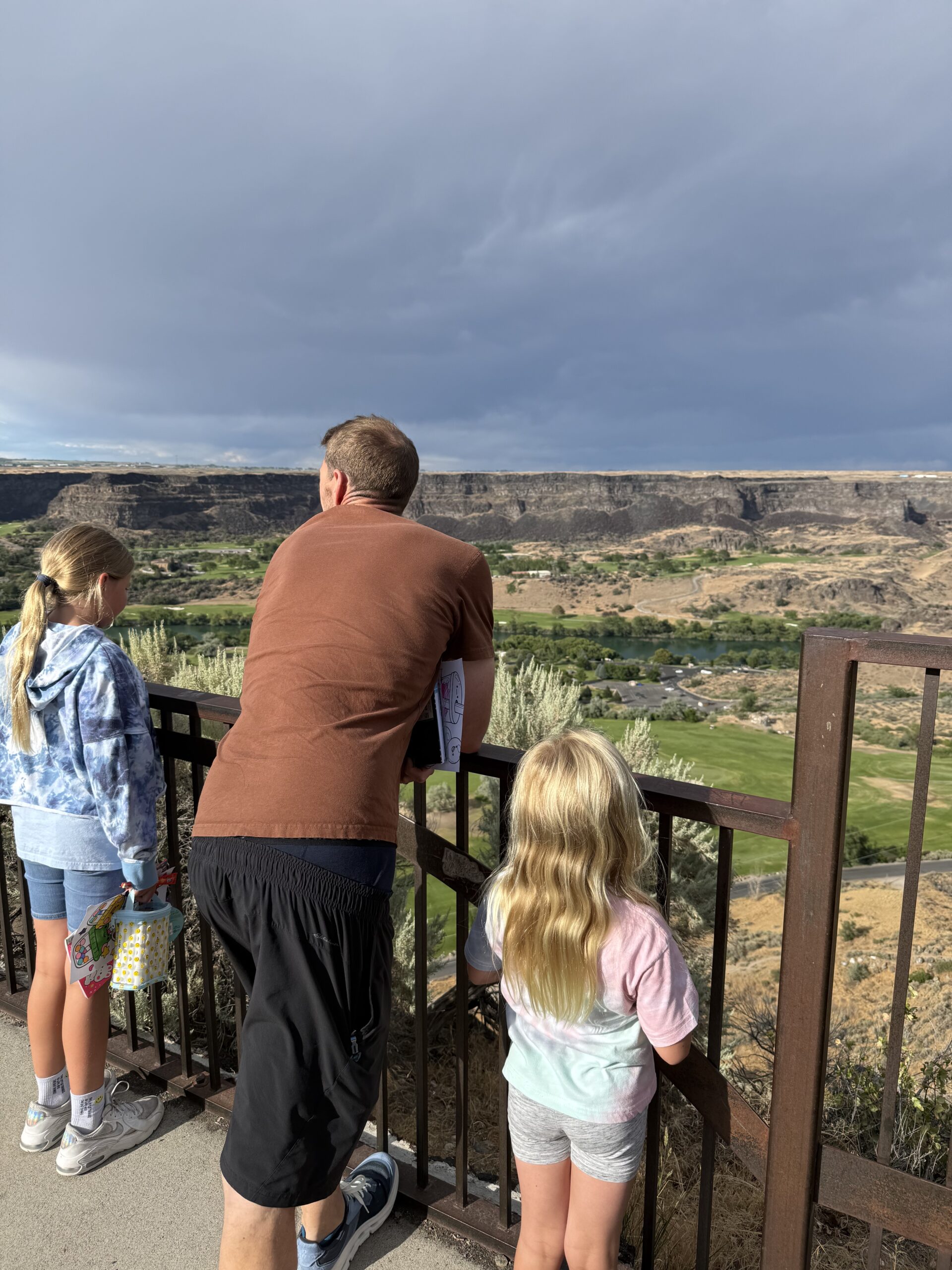
Stop #1: Twin Falls, Idaho
Our first stretch was from Boise to Twin Falls.
Rather than trying to get as far south as possible, we stopped in Twin Falls for dinner. It gave everyone a chance to get out of the car, eat a real meal and reset before getting back on the road.
From there, we continued on to Wells, Nevada, where we spent the night.
It wasn’t necessarily about making Wells the destination. It was about creating a stopping point that made the next day of driving more manageable.
And that’s one of the things I love about using AI for road-trip planning: the goal isn’t always to find the biggest or most exciting attraction. Sometimes the best stop is simply the one that makes the entire day easier.





Stop #2: Bonneville Salt Flats
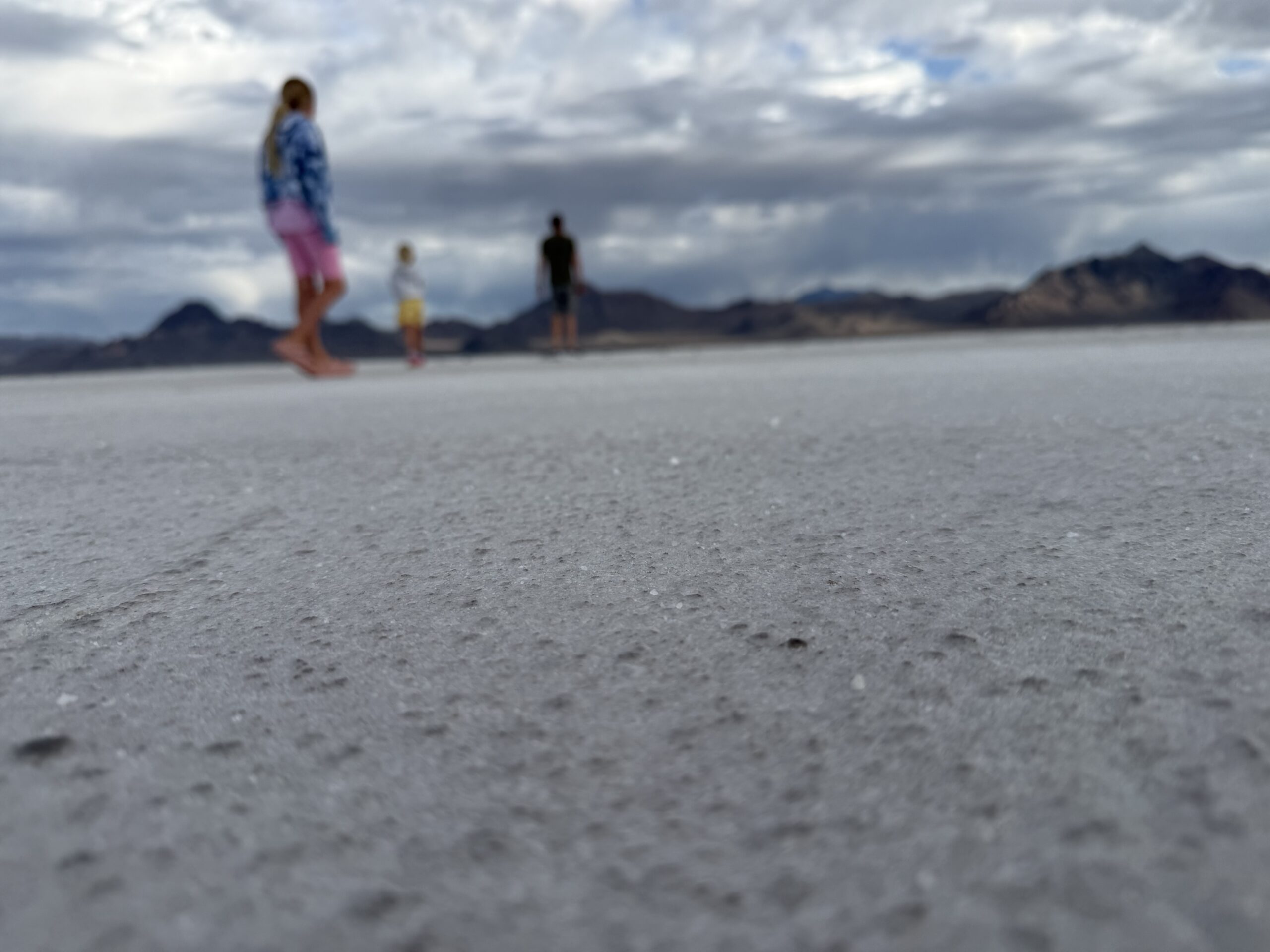
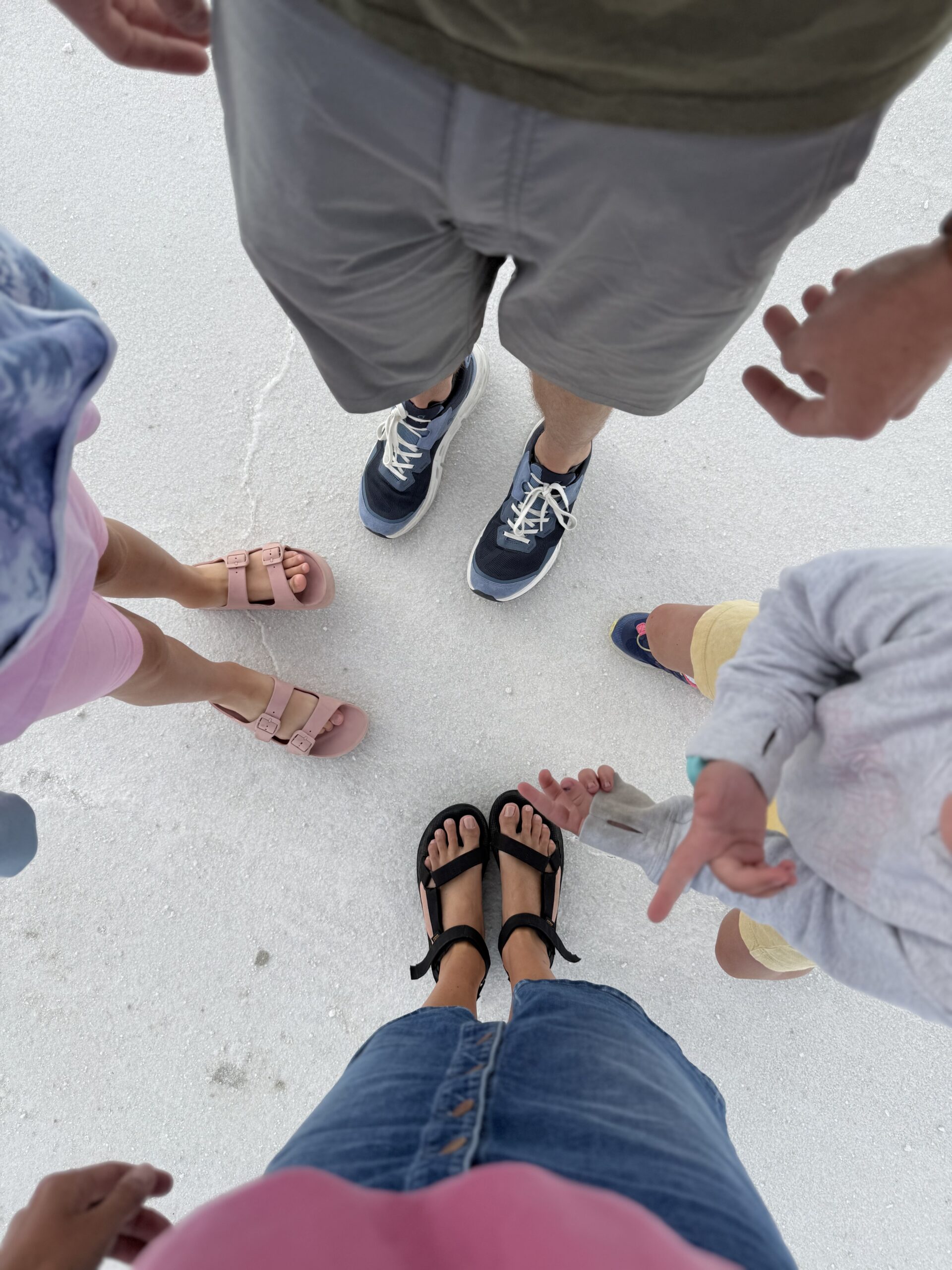
The next morning, we headed toward the Bonneville Salt Flats.
This was exactly the kind of stop I wanted AI to help me find: somewhere that’s relatively easy to access, doesn’t require hours of sightseeing, but makes the road trip feel like an adventure.
We could get out, stretch our legs, take some photos and experience a landscape that feels completely different from home.
And then? Back in the car.
Stop #3: Charcoal Ovens in Ely, Nevada
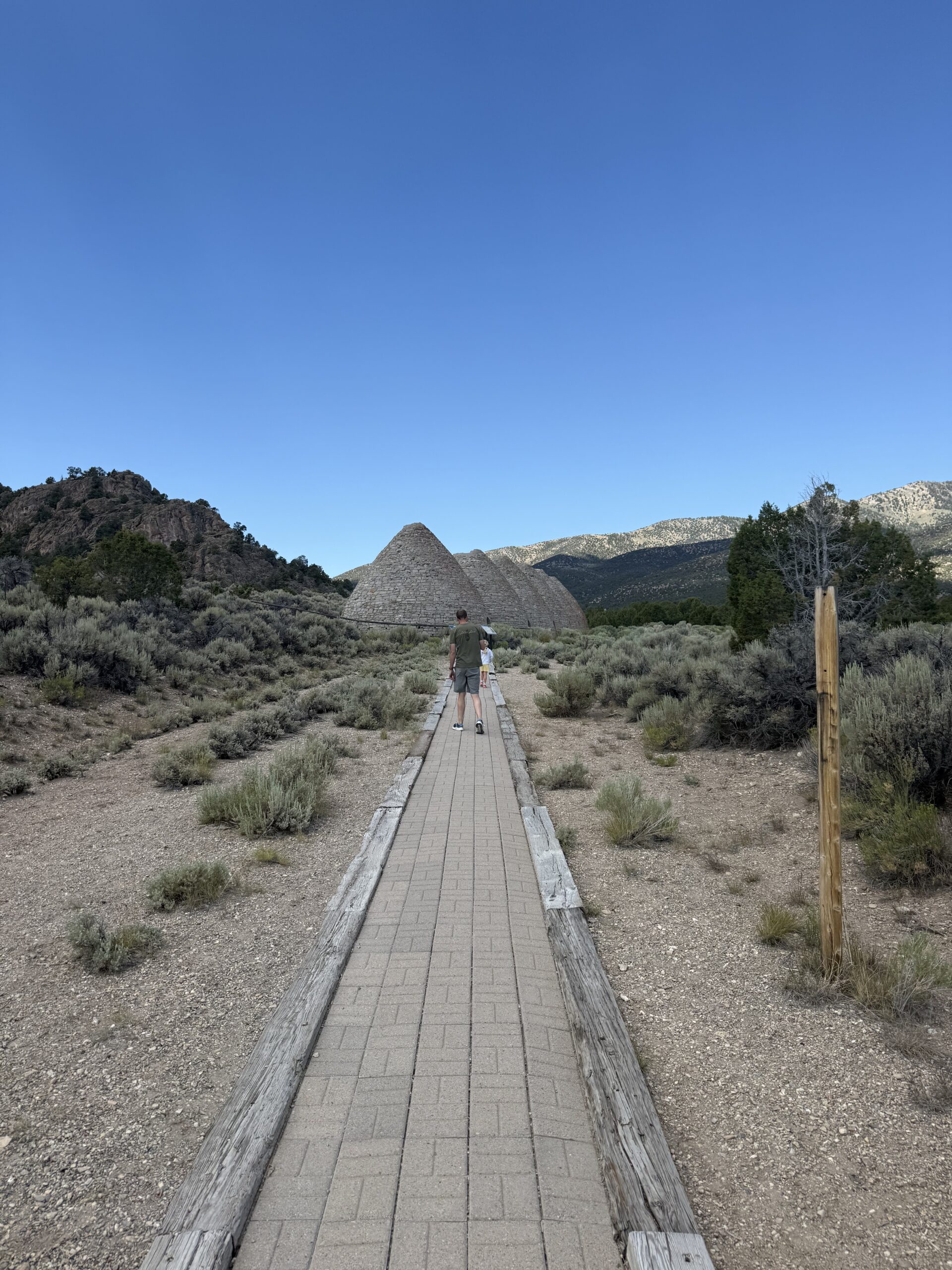
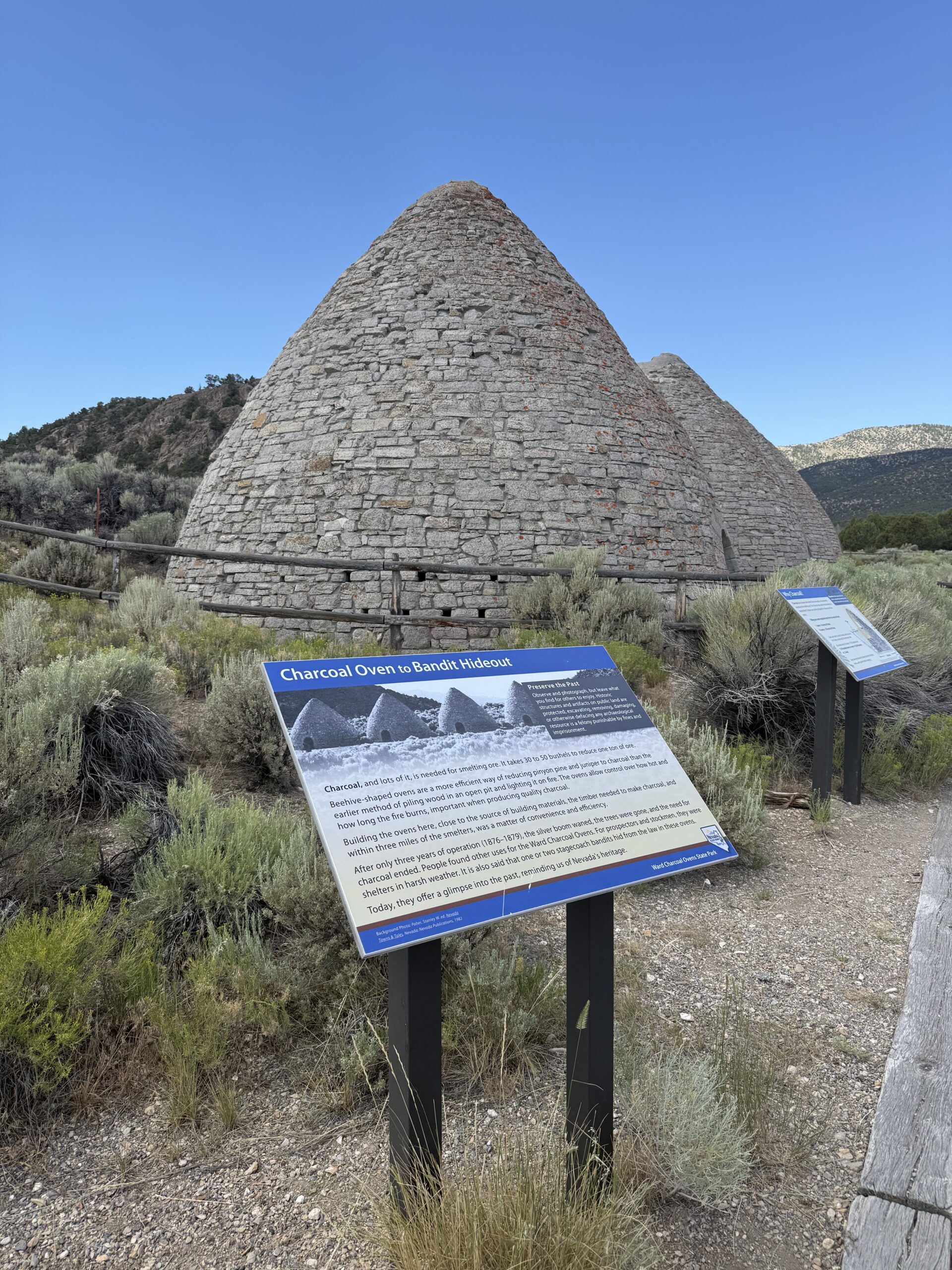
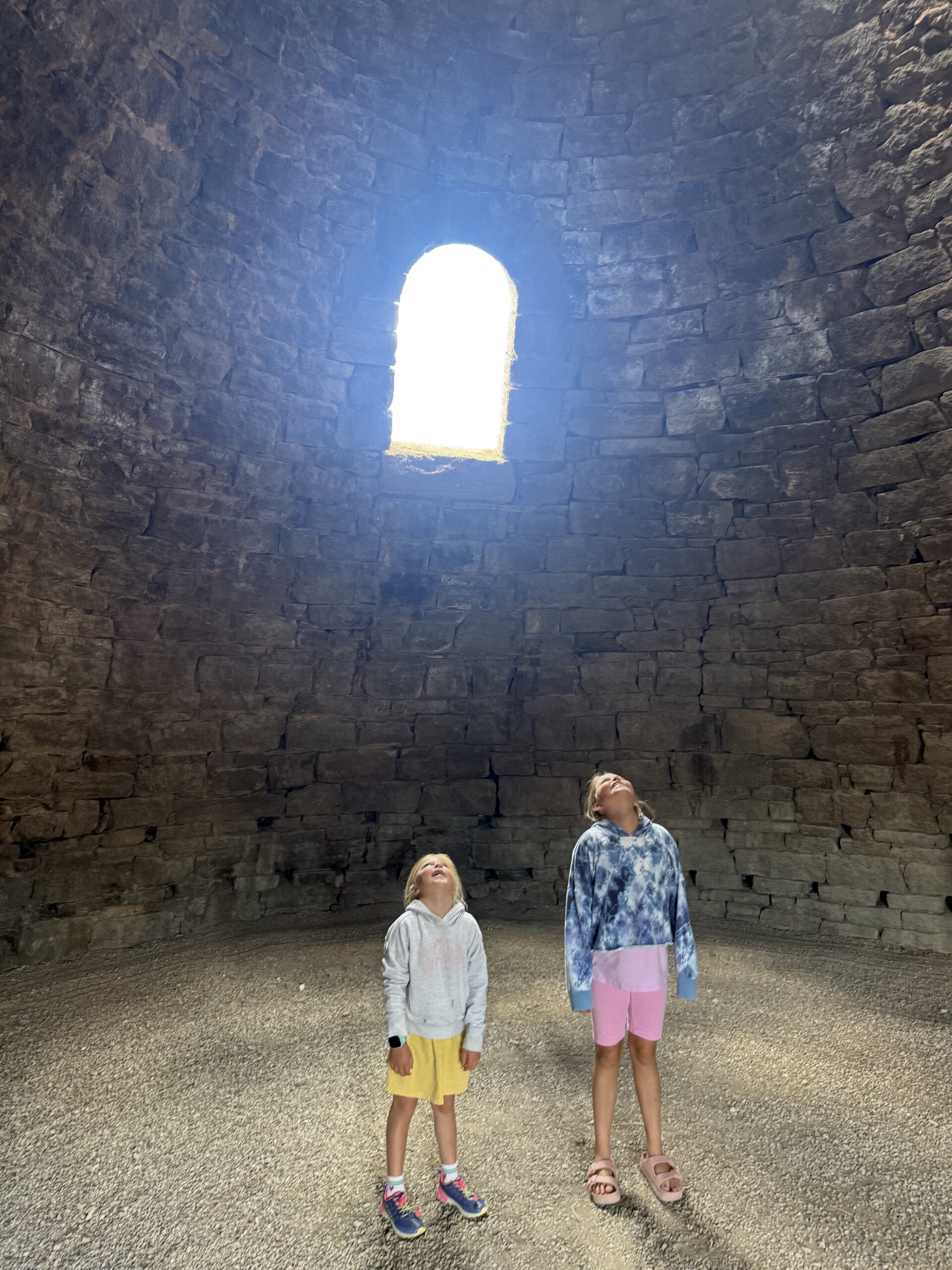
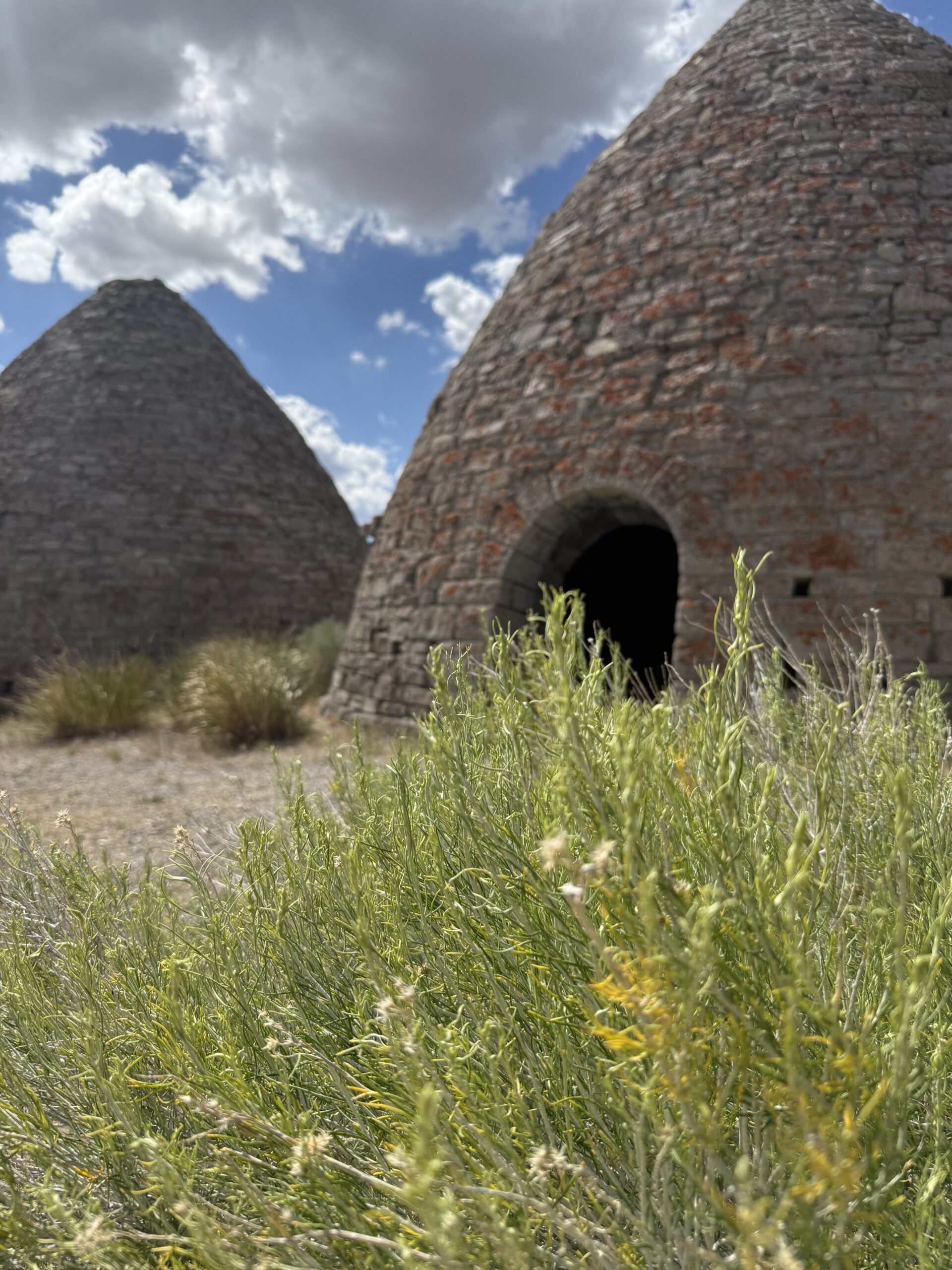
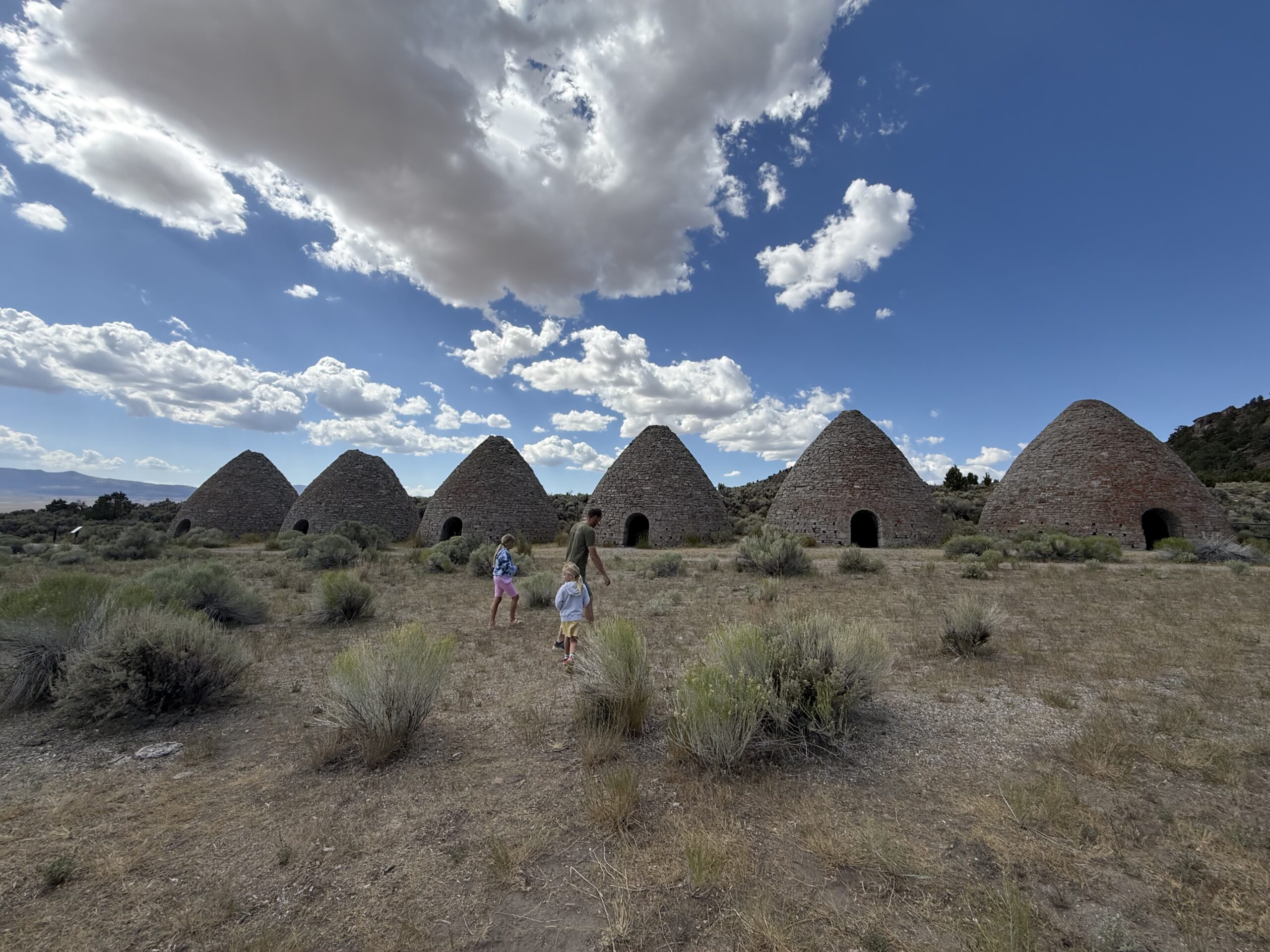
Our next stop was one I probably wouldn’t have thought to seek out on my own: the Charcoal Ovens near Ely, Nevada.
It made a great stretch break.
Instead of pulling into another gas station or fast-food restaurant, we got to wander around, look at the historic ovens and explore for a bit.
These are the kinds of stops that make a road trip with kids so much more enjoyable.
They’re not necessarily destinations you’d build an entire vacation around, but they’re interesting enough to break up the drive.
And that’s exactly what I want from a road-trip stop.
Stop #4: Nevada Northern Railway Museum
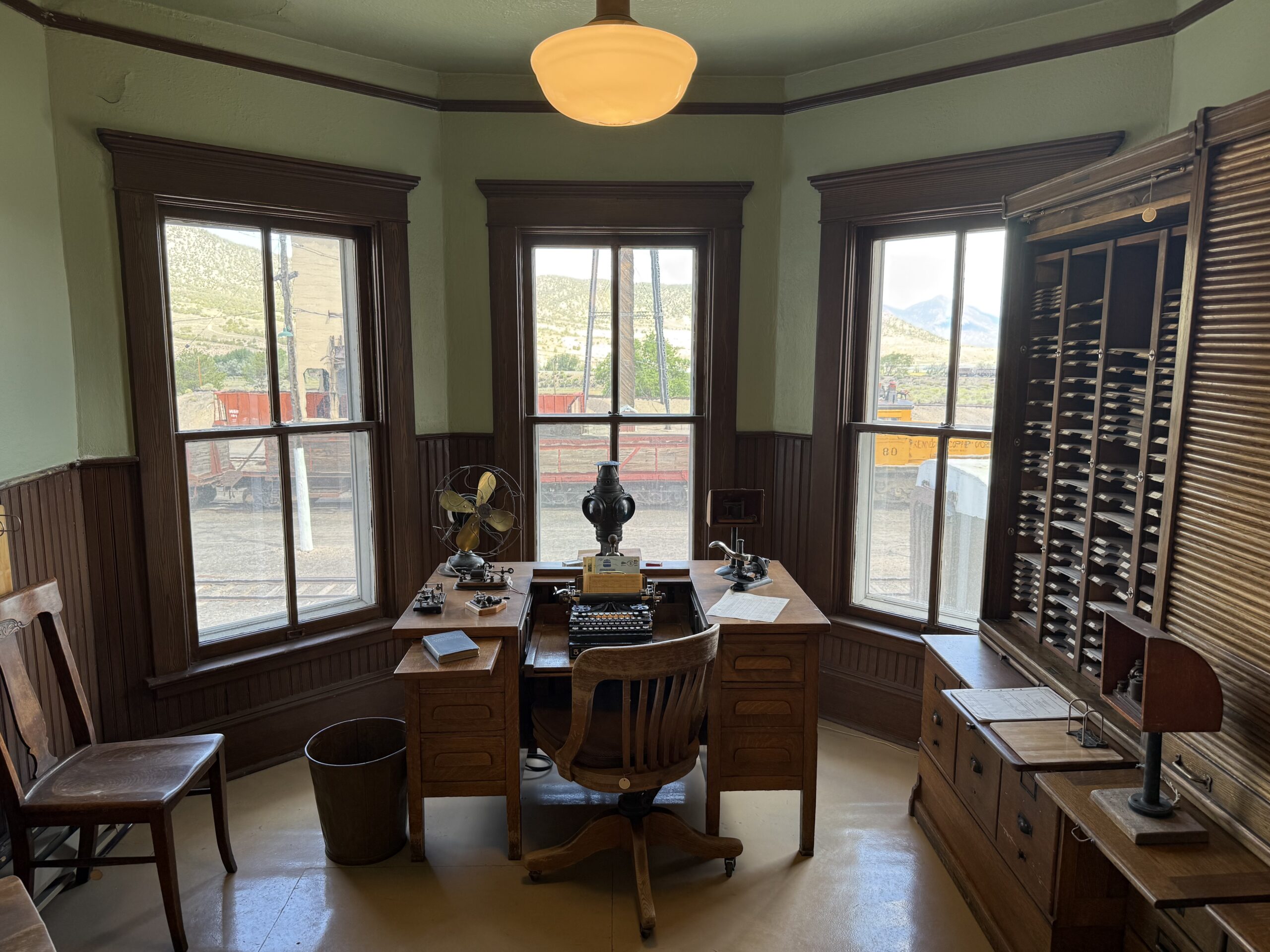
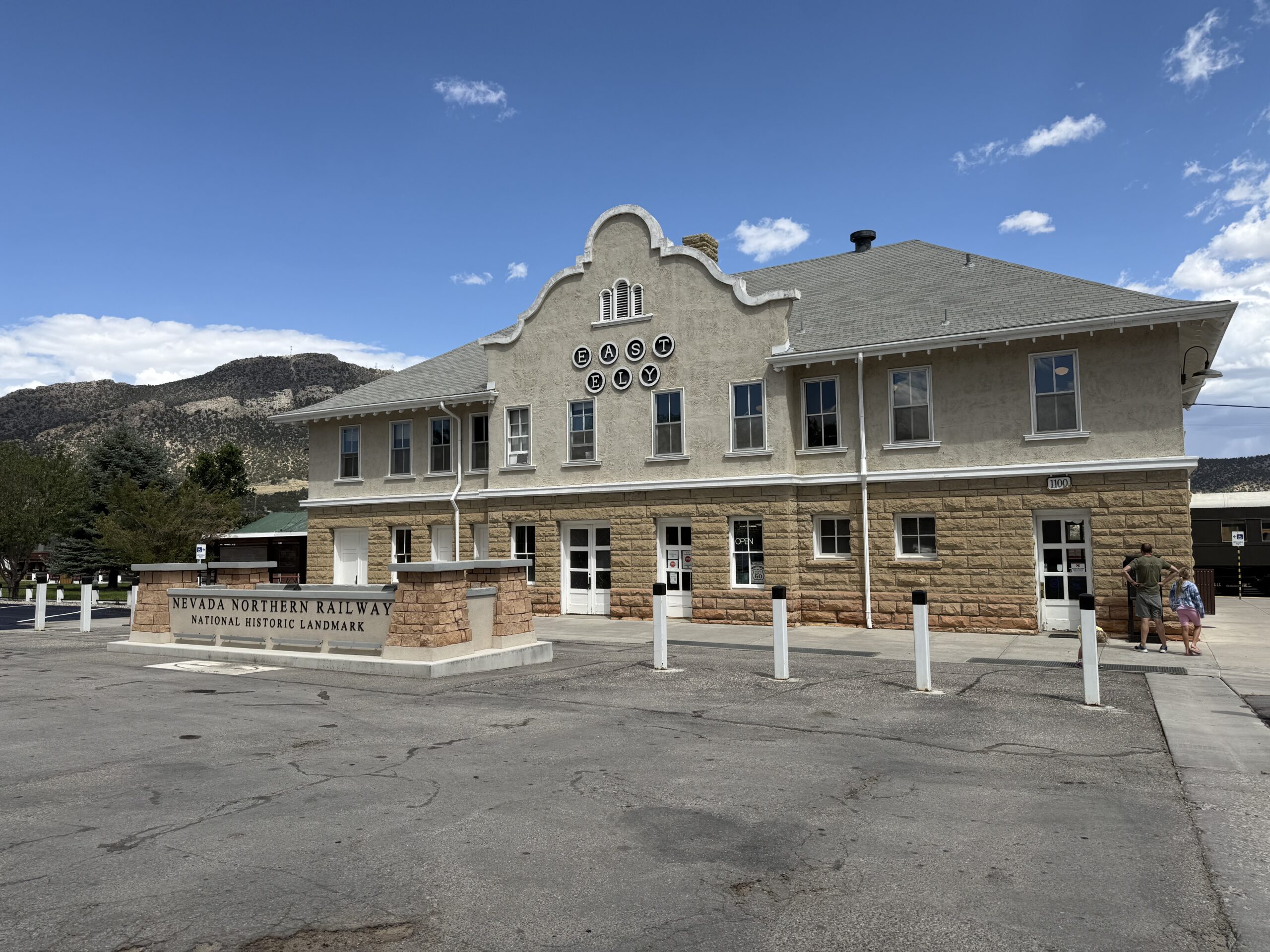
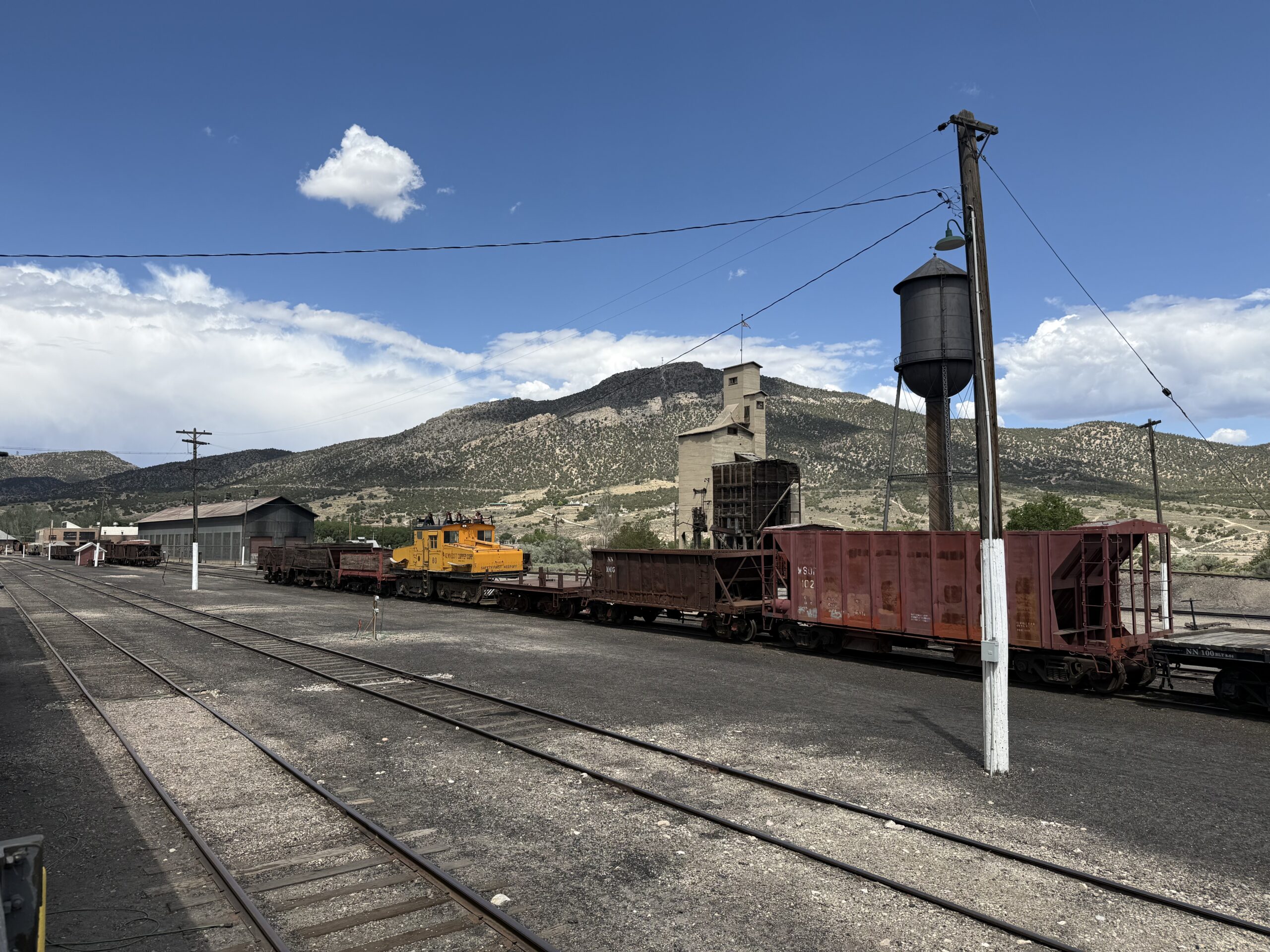
We continued on to Ely, where we stopped at the Nevada Northern Railway Museum.
We packed a picnic lunch, found a place to eat, and took some time to walk around the museum.
This was another lesson I’ve learned from traveling with kids: a picnic and a place to wander can be just as valuable as a major attraction.
After spending some time exploring, we were ready to get back in the car and finish the day’s drive to Las Vegas.



Stop #5: Las Vegas
We spent the night in Las Vegas, giving us another natural stopping point before the final push into Southern California.
By this point, we’d already turned what could have been a monotonous highway drive into several little adventures. And the JW Marriott in Vegas? True luxury but in the heat of summer, a great deal as well!
And we weren’t exhausted from spending eight or ten straight hours in the car.
That was the goal.
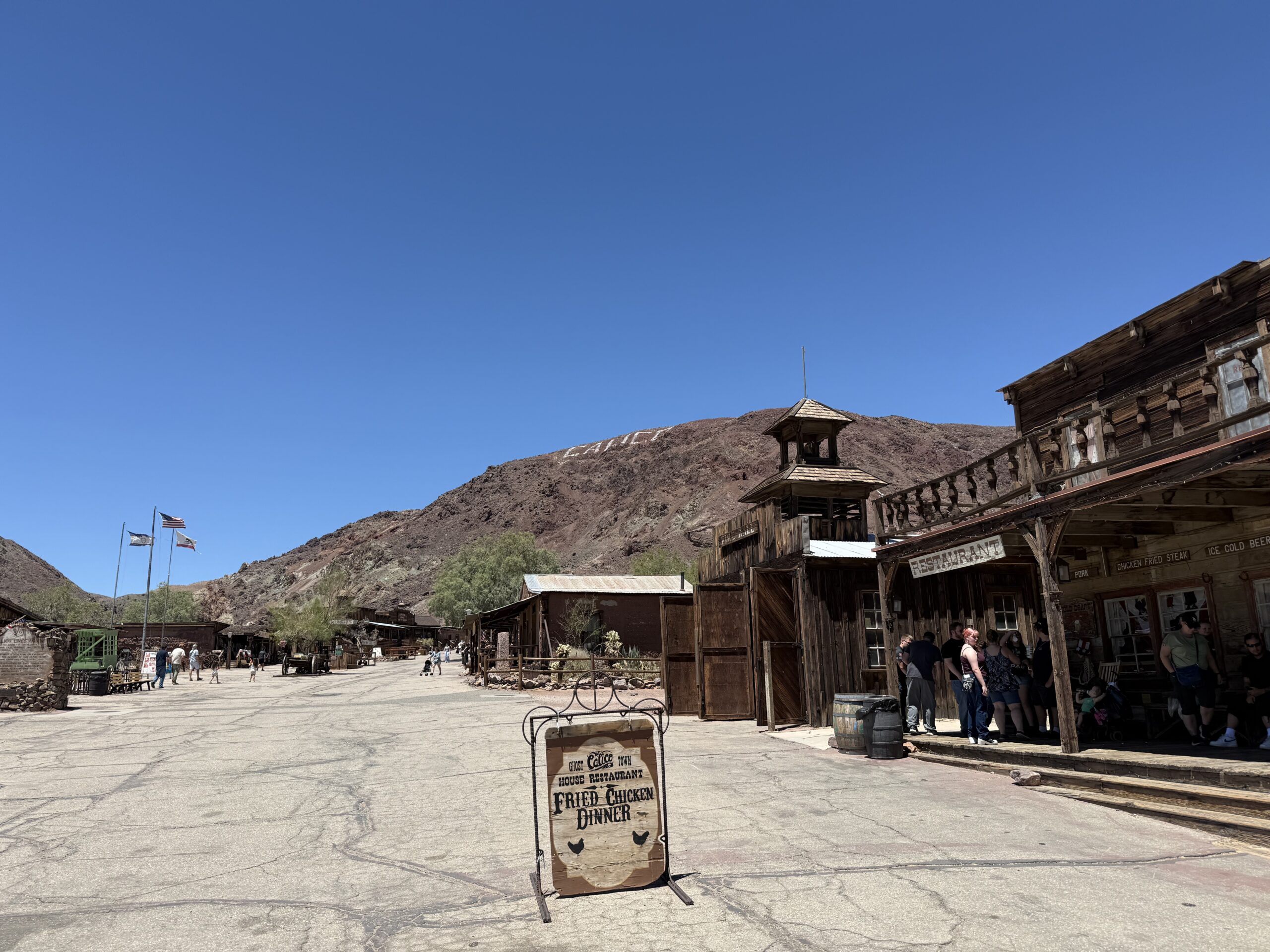
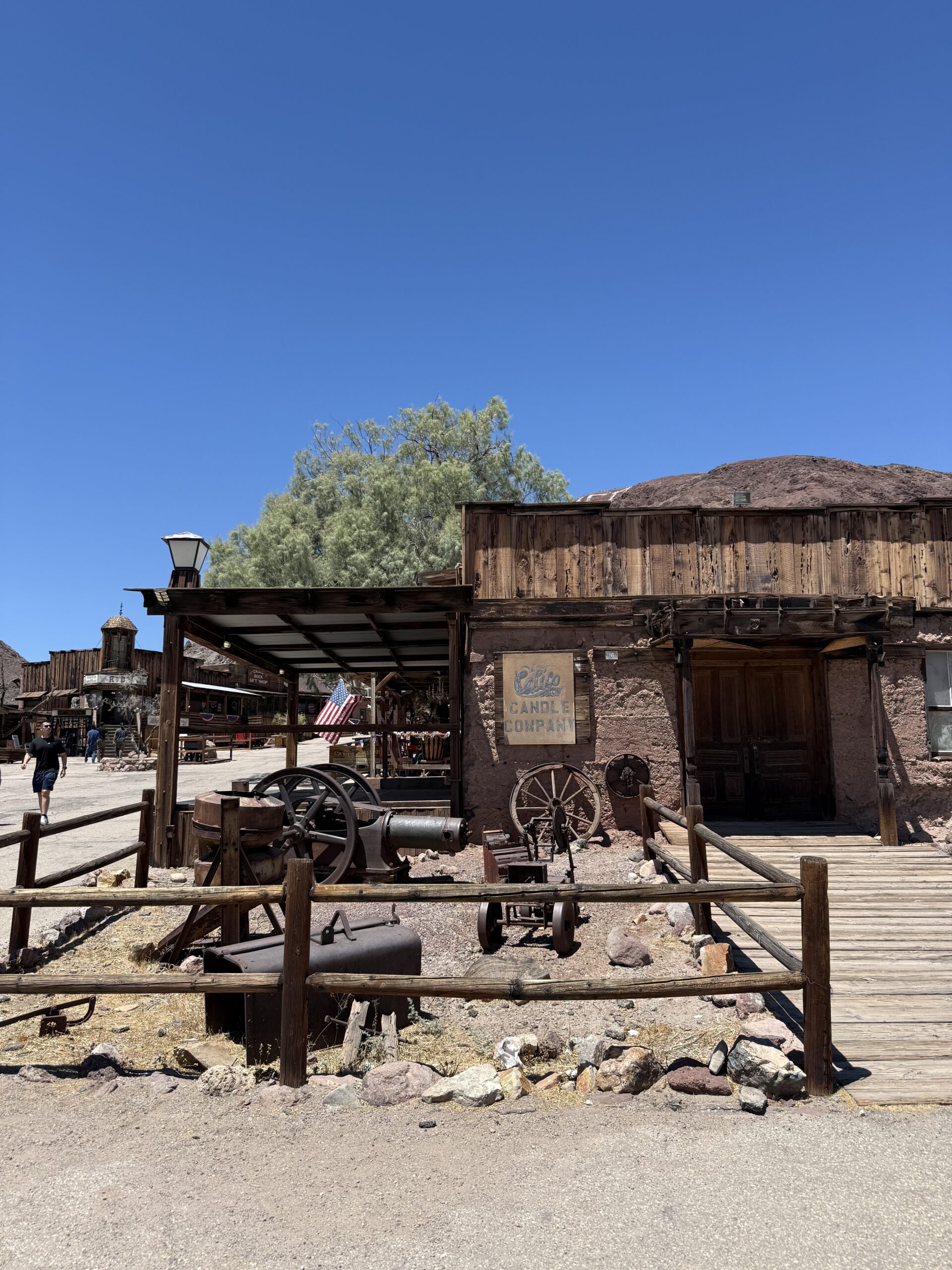
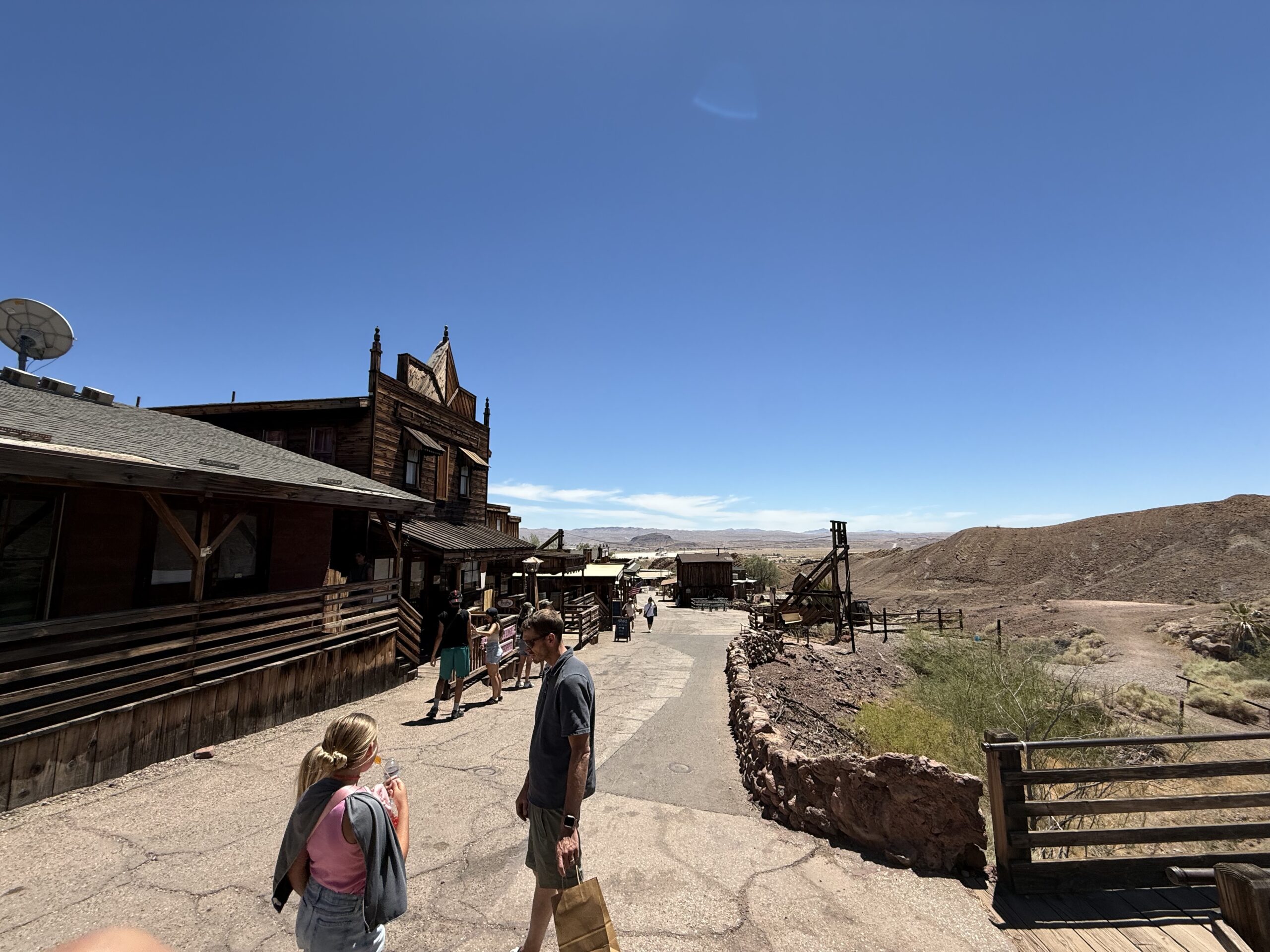
Stop #6: A Ghost Town in Yermo, California
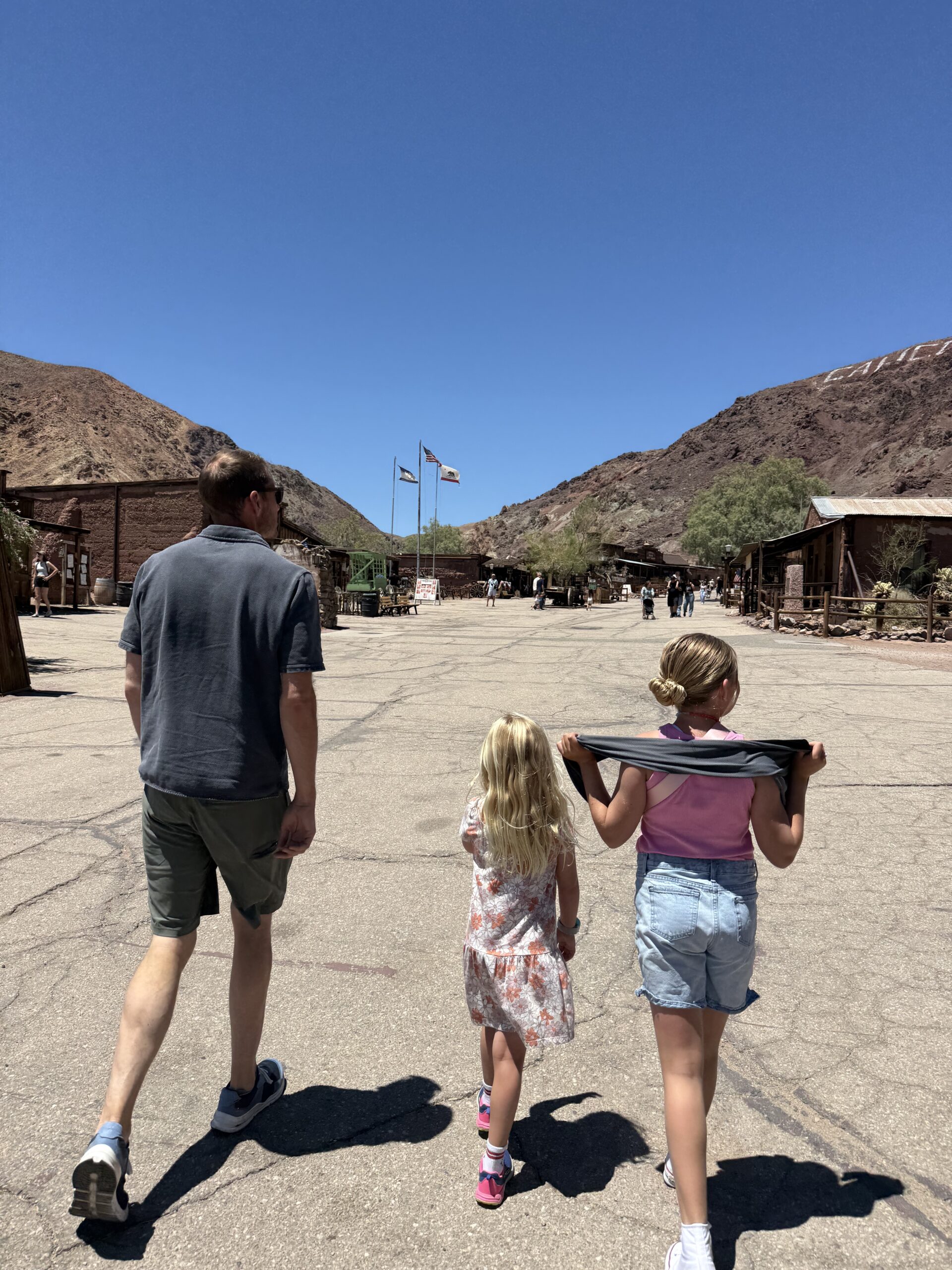
The next morning, we had one final stop before Disneyland: a ghost town in Yermo, California.
It was the perfect way to break up that final stretch.
The kids could get out, explore and burn off some energy before we climbed back into the car for the last leg to Anaheim.
And then finally…
Disneyland!
After several days of driving, arriving at the Disneyland Resort felt like a much bigger part of the adventure because we’d actually experienced the journey along the way.
How I Use ChatGPT to Plan Our Road Trips
I’m not using AI to completely plan our vacations for us.
Instead, I think of ChatGPT as a really enthusiastic travel-planning assistant.
I give it our parameters and ask it to help me brainstorm.
For example, I’ll tell it:
- Where we’re starting and ending
- How many hours we’re comfortable driving each day
- How often we’d like to stop
- The ages of our kids
- Whether we’re looking for outdoor activities, history, food, quirky roadside attractions or something else
- Whether we need a quick 20-minute stretch break or a longer 1–2 hour activity
- Where we’re spending the night
Then I’ll ask it something like:
“We’re driving from Boise to Disneyland with kids. We want to keep driving to about five hours a day and stop every 2–3 hours. Can you suggest interesting, family-friendly stops along the route that take no more than 1–2 hours?”
From there, I’ll keep refining the list.
Maybe I’ll ask:
“Which of these stops is most worth it with elementary-aged kids?”
Or:
“Give me five unusual stops between Wells and Las Vegas that would be good for a 30–60 minute break.”
Or:
“Rework this itinerary so we’re never driving more than 2½ hours without getting out of the car.”
That’s when AI becomes really useful.
The Best Part? It Helps Me Find the Stops I Would Have Missed.
Google Maps is great when I know where I’m going.
But sometimes I don’t know what I’m looking for.
I don’t necessarily want the top 10 attractions in Nevada.
I want something like:
“We’re going to be driving through this area around lunchtime. Is there somewhere unusual where we can eat a picnic, walk around for 30 minutes and let the kids explore?”
That’s a different kind of travel planning.
And it’s where I’ve found AI particularly helpful.
Of course, I still fact-check everything before we go. I check current hours, admission fees, closures, road conditions and whether a suggested attraction is actually open when we’re passing through. AI is a starting point for the research—not the final authority.
I’m Learning to Treat the Road Trip as Part of the Vacation
I think the biggest change AI has made to our family road trips isn’t actually about saving time.
It’s changed how I think about the drive itself.
Instead of looking at a map and thinking:
“Ugh. We have 10 hours of driving.”
I’m starting to think:
“What little adventures can we have along the way?”
A historic site.
A weird roadside attraction.
A picnic in a beautiful spot.
A ghost town.
A train museum.
A place to stretch our legs and take a few photos.
None of those stops necessarily required a huge time commitment. But together, they transformed our drive from getting from Point A to Point B into part of the trip.
And when you’re traveling with kids, I think that’s one of the best road-trip strategies there is.
The destination may be Disneyland, but sometimes the best memories happen somewhere in between.